Want to get started with Tuned Percussion, but don’t have the space or the money for a full size instrument?
Download a comprehensive guide book and Video Tutorials Today.
YOU can get started on Tuned Percussion straight away with this simple instrument that you can make yourself with commonly available tools and materials.
On this page you’ll discover:
How YOU can create a workable beginner instrument that is more than just a "table top" style xylophone
Why two octaves is a great range for you to start with on tuned percussion
How you can have TEN of these instruments in your school for the price of ONE full size concert marimba
THREE really cool and valuable bonuses that you get absolutely free with these plans!
How you can spend a few days on a really fun project that leaves you with an amazing musical instrument which will be the center of conversation in your home for years to come!
Got Questions?
Want to speak to me LIVE?
Contact me right now with Start Chat
or Voice Call
Dear Parent, Music Educator or Percussion Enthusiast,
Have you ever wished that you could get something bigger than a small “table top” style xylophone, yet not a full size concert xylophone or marimba?
Maybe your child is studying tuned percussion and needs a serious instrument at home that won't fill the whole room, and won't break the bank...
Maybe you need instruments for the classroom that are not considered toys by the students, but are still small enough to have one for each student...
You have probably discovered that there just are not instruments that fill this gap - something bigger and more serious than the small “orff style” classroom xylophones but not as big as a concert instrument.
... of course there are a few “Bass Xylophones” with large box resonators - but the last time I checked they cost almost $1000! And they still sit on the floor and don’t have individually resonated notes.
Sit down on carpet = children’s instrument
Stand up to play = musician’s instrument
Don’t get me wrong - there is nothing wrong with the small “box resonated” xylophones - such as available in my project one building plans.
...because for primary and elementary school classrooms these are ideal - the music class sits on the carpet and plays simple tunes, usually with one mallet only.
But older students expect much more these days! Imagine getting senior students to sit on the carpet and play small box xylophones - they just don't take them seriously, and you could actually be turning them away from music!
However... tuned percussion is a great learning tool for music fundamentals at any age because:
You don’t have to worry about sound production (unlike wind and string instruments which are difficult to even get a sound from at the beginning)
They are so inexpensive you can even have a whole bunch of em'!
It's Visual! - You can actually see the musical scales you are playing.
Play standing up OR Sitting down!
Packs away easily.
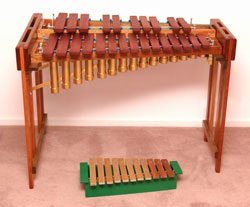
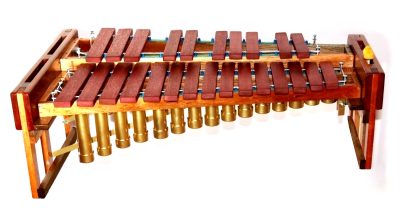
and the P2 Mini-Marimba has some cool design features...
ONE: It dismantles in just 2 easy steps.
You see how simple the construction of the leg parts are? They just slot in to the main frame part. That was done on purpose so you can....
TWO: Easily and cheaply make an additional pair of shorter legs for sit-down playing.
Choosing a practice instrument for beginner percussion students
Box resonated simple xylophones have never been suitable for the serious percussion student, and certainly not to practice at home. Most beginning percussion students if they want to learn tuned percussion have been forced to start on glockenspiel (orchestral bells), and then get a concert xylophone or marimba if and when they can afford one.
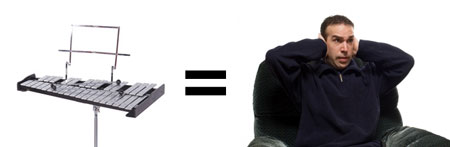
And if you've ever listened to a beginner percussionist practicing on the bells... you very quickly realise that bells can be extremely loud and piercing due to the small metal bars that they are made from. Don't get me wrong - these instruments do have their place. In fact I've even designed and built them myself and the plans are available here.
Finally though... there is another,.. way better option - A small wooden marimba that can be made at home from commonly available materials!
box resonated VS individually resonated notes
OK - What is a resonator… and why does it matter?
The sound on a xylophone or marimba is made by the wooden bar that is hit.
...so when you hit the bar, the air immediately around it vibrates...
... and if you capture that air in a container of the right size - you’ll make the sound louder
You see, that is what a resonator essentially does - it captures the vibrations that come from the note that has just been hit and it makes them louder.
A Box Resonator
So the boxes used by small Orff style xylophones are carefully designed to get the correct amount of air vibrating. If you look inside the box of any small xylophone you’ll sometimes see what looks like complicated bits of wood making it smaller in places and larger in other places.
... and the reason is that each note needs a different amount of air in the box to amplify the sound correctly...
BUT... if you listen carefully to a box resonated xylophone you’ll find that no matter what brand it is, how expensive or carefully made it is, some notes will “sing” more clearly than others - this is just because a box resonator cannot possibly be exact in its attempt to be the correct size for each note.
Individual Tube Resonators
In CONCERT xylophones and marimbas you’ll find each note has a tube underneath, which is precisely tuned to the exact note. This gives your P2 mini-marimba a much more even and pure sound as well as maximizing the volume from each note and the accuracy of its pitch.
So... for the elementary or primary school classroom box resonated instruments are fine, but I firmly believe that for older school students or if you are actually learning tuned percussion, an individually resonated instrument is the way to go.
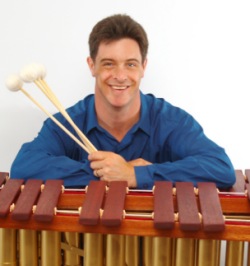
Jim McCarthy, Author, percussionist and instrument builder shown with one of his marimba designs
Got Questions?
Want to speak to me LIVE?
Contact me right now with Start Chat
or Voice Call
Firstly, let me introduce myself.
My name is Jim McCarthy, and I’ve been a percussionist for over 20 years.
I’ve always had a passion for building things, but I’d never consider myself a professional at woodworking or trades… I’ve always been a musician first.
and this means that if I can build this project... You can easily do it as well. You don't need to do any of the design, thinking, hard work and making mistakes - I've already done all that for you!
When I studied for my masters degree I got really into Acoustics and learned all about how Marimbas were built – I even made some massive, world record bass marimbas to indulge my hobby...
But these days my goals are much more practical... I design instruments especially for people like you. It started years ago when I built a few instruments to assist my wife in her school music program. You may have seen the Project 1 Box resonated Xylophone which people all around the world are already building to save money for their schools. Or even the Project 3 concert marimba which is in common use by advanced students of marimba.
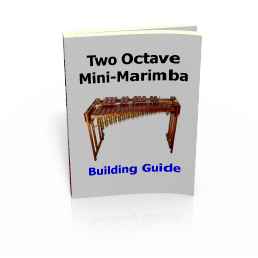
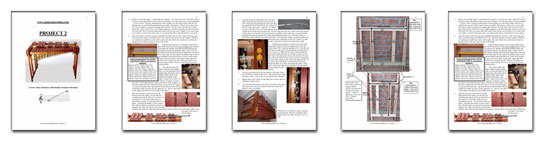
Part 1 - Step by Step Instructions in a 44 page e-book
Your e-book features 131 Photos and diagrams showing you every step of the process in meticulous detail - nothing is left for you to "guess" - As much as possible I have included every piece of information you need.
Part 2 - A 45 Minute Video showing you how to tune a marimba bar, including fine tuning of the harmonics
So all the hard work is done for you, and you’ll even have included:
Instructions on how to drill and mount the bars in the correct way to ensure that every note sings clearly
The measurements of the bars that work every time, no matter the wood you are using.
What to build the resonating tubes from so that they are inexpensive and easy to work with and exactly how to get them perfectly in tune.
Instructions on how to raise or lower the pitch of the bars by sanding in the correct places.
How to tune the most important harmonics (overtones) on the lower bars to make them sound pure, tuneful & resonant.
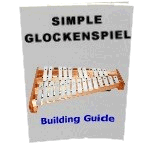
You also get the building guide for this really cool glockenspiel project completely free!
There's no doubt you'll prefer playing on your 3-octave vibraphone, but nothing beats this simple glockenspiel for portability, ease of build and small cost of build. This building guide is not a soft bonus either - it's 23 pages tightly packed with loads of photos and all the details you need for a fantastic result with zero thinking!
Considering you get to build two instruments for the price of one, this bonus makes the whole deal areal no-brainer!
Plus Cool BONUS #2!
Once you have your instrument finished you will want to play something on it. Sheet music is usually only a few dollars to buy, but it can cost you HEAPS of time finding something suitable for your instrument which is easy to learn and sounds cool. That's why I've written loads of music especially for this instrument - and I'm giving you your first piece completely free!
Having an instrument without music is like having a toy without batteries....
Well when you build THIS instrument, the music is included!
Plus Cool BONUS #3!
Free One Month's subscription to Percussion Keys Website!
This is Definitely for You if you want to learn more about playing & building marimbas, xylophones and other percussion instruments.
You have FULL access to:
The entire "KEYS" video tutorial series, teaching YOU to play marimba & vibes.
Member's forum and Q&A Section.
Monthly Lessons and Videos asked for by YOU, the user.
A Unique library of useful downloads & FAQ for instrument builders and percussionists.
Free sheet music and exercise sheets.
"Cool Videos" of the month.
The retail price of "Percussion Keys" membership is normally $4.95 to set up and just $13.95 per month. BUT... for this one time only as a bonus for purchasing this building guide - you have the option to get that first month's $13.95 free! And of course you have absolutely no obligation to continue your membership past the first month, so you have nothing to lose. Even the tiny $4.95 set up cost is no risk, because it is covered by my 100% money back guarantee. You decide it's not for you...? Then just tell me and I'll give you a full refund.
Is my homemade instrument going to sound as good as commercially available instruments?
I'm not going to suggest that you can build an instrument which will sound identical to the commercially available instrument, not with basic wood that you can get from the hardware store. However - have a listen to this sample - You'll hear that you can actualy get a really good result even from generic timber!
Listen to the the prototype instrument constructed and photographed on this page
and... if you use the same timbers as commercial manufacturers do, then there's no reason why your marimba can't sound JUST as good!
Do I need special wood for the bars?
The great thing about this project is that it will work for you, no matter what wood you have available
Concert quality instruments are usually made from Honduras Rosewood or African padouk, and obviously the better wood you have access to the better instrument you’ll be able to make. However you can make this instrument from just about any hardwood (eg, Durian or Meranti).
How much will the materials Cost?
Depending on where you live you should be able to get all the materials you need for between $200 - $300, from the local hardware or wood supply store.
and if you wish to make an even better sounding instrument you can of course invest in a better bar timber, such as Rosewood. This will cost you a little more, but will still be way less than purchasing a real concert instrument.
Does the plans include both Metric and Imperial Measurements?
YES! The plans include both imperial (feet and inches) and metric (millimetres) measurements.
Do I need to be good at woodworking to achieve this?
Absolutely not! I’m not a carpenter - I’m a musician. Most of the skills required are fairly basic woodwork – measuring, cutting and sanding.
Even if you’ve hardly ever picked up a hammer or a saw in your life I’m confident that you’ll be able to achieve a workable instrument using these plans. Of course I've picked up a few clues over my time designing and building instruments, but I've put all the important construction tips in the package for you.
Do I need lots of expensive tools?
Most of the tools you need are commonly available
All you need is:
An electric drill with a sanding attachment
A screwdriver
A wood saw
A small hammer
Sandpaper and sanding discs
Hacksaw
Rivet Gun
Plus a few other bits and pieces commonly found around the garage!
Do I need any special tuning equipment?
A basic electronic tuner is highly recommended. Any chromatic tuner will do the job, and you can get a really basic electronic tuner from any music store for around $50, or simply borrow one from a friend to get the job done! These tuners are incredibly common – nearly all professional musicians or music teachers either own one or have a friend who owns one.
BUT... if you don’t have access to one, don’t worry – as I’ve included a full set of sine waves (clear and clean tones) that you can use to tune the notes by ear. If you have a musical ear it is really easy to do it this way.
Does it matter what the resonators are made out of?
This is definitely one of the biggest areas of misunderstanding for most people.
The fact is that it makes very little difference!
Comercial instrument manufacturers will often TALK about the sounds of different resonator materials - they want to make their instruments seem more special - BUT have you EVER seen anybody publish an actual audio comparison?
and think about it......The resonator's job is to amplify the sound – and it does this by containing a column of air which is the correct size to resonate when sound waves from the bar enter it.
So... does the column of air really care what is containing it? or does it even know? Remember it’s the column of air that is vibrating.. not the container, so what it's made from really makes very little difference!
and I've heard people argue that certain materials are a little harder and reflect sound better than others - well this is true... but here's the thing...
Extra hard metals etc only make a difference at quite high frequencies - the frequencies way above the range of marimbas. Only the upper harmonics of marimbas are in this frequency range - and guess what... these upper harmonics are actually tuned to NOT resonate in the tubes!!!
The plans included for this instrument use PVC pipe for the resonators because:
They are lightweight
They are inexpensive
They are easy to work with
They don’t require heavy duty hardware to hold them in place
And you can get PVC pipe at just about any hardware store, as it is usually used for drainpipes around just about any home! Of course - if you really want to use different materials for your resonators, there's absolutely nothing stopping you. The building guide still tells you how to get the result you are after.
Do I have to wait for anything to be shipped to me?
Absolutely not! You have instant access to the e-book and videos via download, so you can get started immediately. The plans print out in Adobe Acrobat Reader (which is a free download, and nearly every computer already has it installed anyway).
How Much do these plans Cost?
I’ve made these plans available to you for just $39.95 US Dollars. You can go to www.xe.com and check it out in your currency.
So, together with approx $200 for materials, you can build this instrument for under $250…
$39.95 for the plans is not much at all when you consider:
The length of time that I had to study acoustics in order to bring these plans to you
The trial and error that I went through in designing frames, tuning bars and resonators and selecting materials, so you don’t have to!
The near impossibility of finding this information out through other sources – I looked through hundreds of books on the subject – and I couldn’t find the practical, necessary information needed to just build a marimba myself.
Detailed instructions on building a serious marimba, simply ARE NOT AVAILABLE ANYWHERE ELSE!
When you click on the order link below on this page, you will instantly have download access to the plans for this Two Octave Marimba, and can start building immediately...
But before you do I want you know know something really important....
Your 100% Money Back Guarantee You have 56 days so that you can fully try out the product!
It took me nearly ten years to build up the skills to effectively tune bars and design marimbas that worked, and that’s why I know my plans work.
Obviously I can’t build the instrument for you, and your success is going to be determined by a little bit of your own efforts.
If however, you feel that my plans are at fault and they don’t work for you then simply contact clickbank within 56 days for a full refund of the purchase price of this building guide – no questions asked. In fact I insist! I don't want your money if you can't successfully use them to make your own instruments.
And remember that you don't even have to do it yourself...
...you can easily give the plans to an enthusiastic wood-worker to do as a project, or you can even use it as a school class project!
So... You won't regret it, and this will be one investment that could save you thousands of dollars!
Got Questions?
Want to speak to me LIVE?
Contact me right now with Start Chat
or Voice Call
See you on the next page!
Jim McCarthy
P.S. There's no gimmicks here - just real information that you won't find anywhere else!
P.P.S. This is the Perfect solution for YOU if you want a professional instrument for a tiny fraction of the normal price - and also have heaps of fun creating a conversation piece for your home that will have the whole neighborhood talking!
P.P.P.S. - Interested in the plans for the box xylophone and concert marimba as well? Why not save yourself a few dollars and get them all together?
Disclaimer
The informational products available at makeamarimba.com and buildavibraphone.com are designed to give the user all the information required to build the corresponding instruments to the same level and finish as the original prototypes pictured on the websites. The final results produced by the end user are naturally dependent partially on their own abilities and efforts. Some of the skills and techniques described in the building guides may require the end user to practise a little before a high proficiency is achieved. This is an expected part of the building process. Once these skills are sufficiently achieved however, the end user if using due care, should be able to build an instrument for a significantly lower cost than that of any commercially equivalent model.



 ONE: It dismantles in just 2 easy steps.




 You also get the building guide for this really cool glockenspiel project completely free!
 Once you have your instrument finished you will want to play something on it. Sheet music is usually only a few dollars to buy, but it can cost you HEAPS of time finding something suitable for your instrument which is easy to learn and sounds cool. That's why I've written loads of music especially for this instrument - and I'm giving you your first piece completely free!